PIGS: My Approach (And Purdue's) to Standups
Learn the PIGS standup framework (Progress, Issues, Goals) I picked up in Purdue EPICS and used to lead teams. Run faster, more useful standups, async or live.
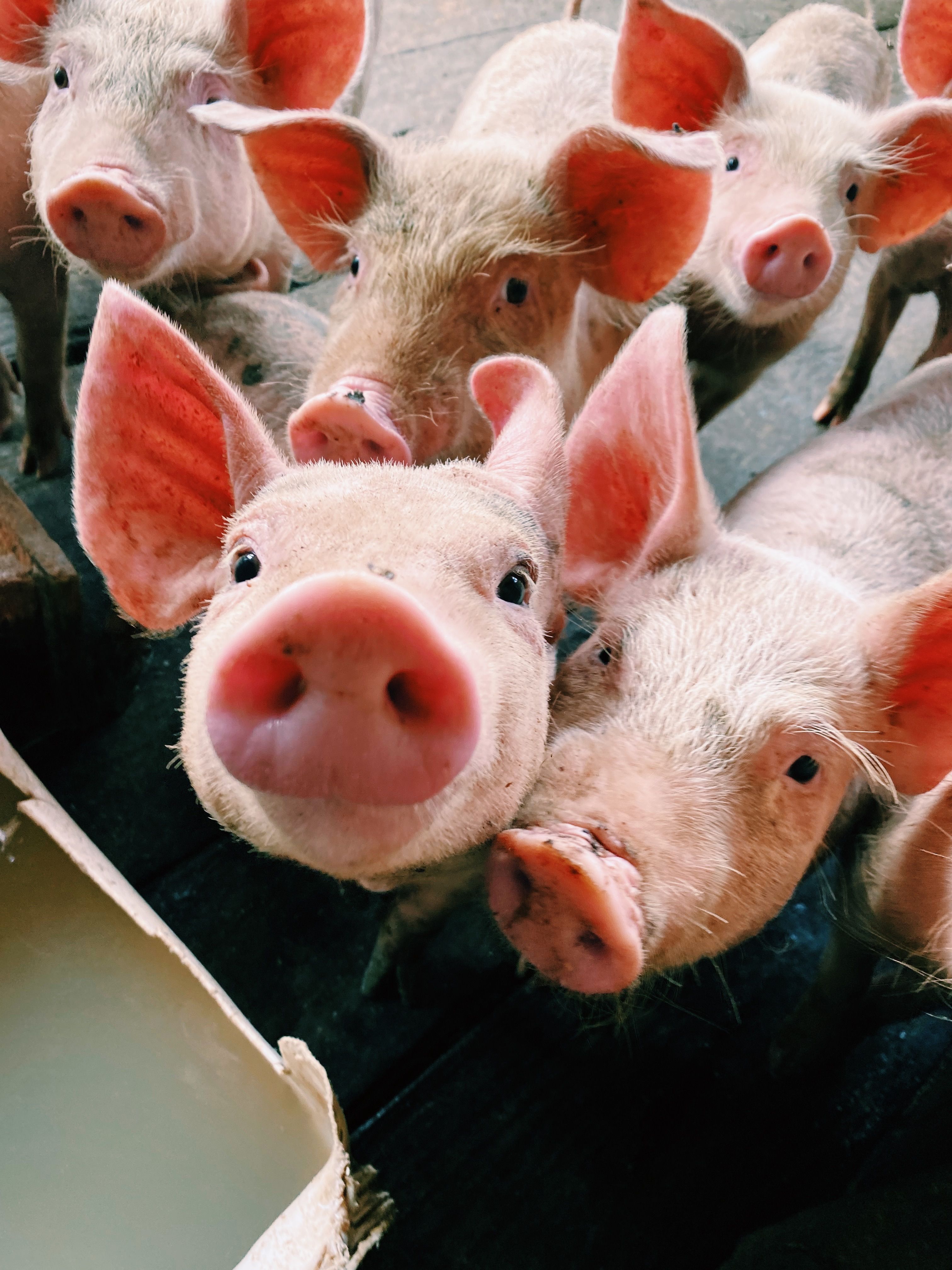
Most standups fail in the same way. Someone starts talking, nobody is quite sure what's being asked, and five minutes later you're hearing a 90-second story about a ticket that only two people care about... or even worse- some random anecdote about how one of your people's cat ate a sock. The meeting that was supposed to take 15 minutes takes 40, and everyone leaves with the quiet suspicion that it could have been an email.
I've led teams for a long time, across managed services, hosting, infrastructure, and software development. The single most reliable fix I've found for bad standups came from my time at Purdue, in the EPICS program. It's a three-word framework with a slightly silly name: PIGS.
Progress. Issues. Goals.
This article explains what PIGS is, why it works, how to run it with your team, and how I ended up building an app around it.
What Is the PIGS Standup Method?
PIGS is a simple structure for team status updates. Each person answers three questions:
- P: Progress. What did I get done since the last update?
- I: Issues. What is blocking me, slowing me down, or worrying me?
- G: Goals. What am I committing to accomplish before the next update?
That's the whole framework. It's easy to remember, easy to teach to a new hire in thirty seconds, and flexible enough to work for a software team, a help desk, a fabrication shop, or a student engineering project.
The name is a mnemonic, and it sticks. People remember "PIGS" far more reliably than they remember "yesterday, today, blockers," and a memorable framework is one that people actually follow.
Where PIGS Came From: Purdue EPICS
I learned PIGS in Purdue's EPICS (Engineering Projects in Community Service) program. EPICS puts multidisciplinary student teams on real projects for real community partners. That's a very different environment from a normal classroom. You have deadlines, a client who depends on you, teammates with different skills and schedules, and a project that doesn't care how busy your week was.
In that setting, communication is the whole game. A team of students juggling classes, labs, and part-time jobs can't afford long, wandering meetings. They need a quick, repeatable way to answer three questions: Are we moving? Are we stuck? What happens next?
PIGS answers all three, every time.
I carried it with me after Purdue. When I went on to lead engineering and operations teams, including in large organizations, I kept coming back to the same structure. It scaled from a handful of people to much larger groups because the format doesn't depend on team size. It depends on discipline.
Breaking Down Each Letter
P is for Progress
Progress is what actually got done, not what was worked on. That distinction matters.
"I worked on the migration" is activity. "I moved four client sites to the new host and verified DNS on three of them" is progress. A good progress update is specific, finished (or clearly partially finished), and something a teammate could verify.
Why it matters:
- It gives the team a shared picture of momentum.
- It creates a lightweight record of accomplishments.
- It nudges people toward finishing work instead of just touching it.
- It makes wins visible, which is a real morale tool on hard projects.
Tip: Encourage people to name outcomes rather than hours. "Finished the invoice export" beats "spent the morning on invoices."
I is for Issues
Issues are anything that's slowing you down or could slow the team down. That includes blockers, but it also includes risks, unclear requirements, dependencies on other people, and things that just feel off.
This is the most valuable part of the standup, and the one most teams handle badly. People hesitate to raise issues because it feels like admitting weakness. A good leader's job is to make raising an issue the expected, normal, and respected thing to do.
Why it matters:
- Problems surfaced early are cheap. Problems surfaced late are expensive.
- It tells you where to spend your attention as a lead.
- It lets teammates volunteer help before anyone has to ask.
- It separates "I'm stuck" from "I'm slow," which are very different conversations.
Tip: Include potential issues, not just current ones. "I'm worried the vendor won't deliver by Friday" is exactly the kind of thing you want to hear on Tuesday.
G is for Goals
Goals are what you commit to before the next update. This turns the standup from a report into a commitment.
When someone says out loud, "By the next standup I will have the deployment script tested and merged," they've made a small public promise. That's a powerful accountability mechanism, and it's friendly rather than punitive. Next time, the Progress section naturally closes the loop on last time's Goals.
Why it matters:
- It gives each person a clear target.
- It makes priorities visible to the whole team.
- It creates a natural feedback cycle: Goals become Progress.
- It exposes overcommitment early, since a goal list that's obviously too long gets noticed.
Tip: Keep goals small enough to finish. Two or three real goals beat a wishlist of ten.
Why PIGS Beats the Classic Standup Questions
You've probably heard the standard three:
- What did you do yesterday?
- What will you do today?
- Are there any blockers?
PIGS is a close cousin, but I've found it better for a few reasons.
It's time-agnostic. "Yesterday and today" assumes a daily cadence. PIGS works for a daily, twice-weekly, or weekly cadence, and it works across time zones where "yesterday" is ambiguous. That matters a lot if, like me, you manage a distributed team that includes remote staff on the other side of the world.
It emphasizes outcomes. "What did you do" invites a list of activities. "Progress" invites a list of results.
It treats issues as first-class. In the classic format, blockers are an afterthought tacked on the end. In PIGS, Issues get equal weight with everything else, which signals that raising problems is part of the job.
It's memorable. This sounds minor, but it isn't. A framework people can recite from memory is a framework people use.
How to Run a PIGS Standup (Step by Step)
Here's the format I use with my teams.
1. Keep it short and consistent
Aim for 15 minutes or less. Same time, same format, every time. Consistency is what makes a standup feel like a habit rather than an interruption.
2. Go person by person
Each person delivers their PIGS in order: Progress, Issues, Goals. Aim for roughly a minute each. If it's running long, it's usually because someone is solving a problem in the meeting that should be solved after it.
3. Park the deep dives
When an Issue needs real discussion, capture it and say, "Let's take that offline." Standup is for surfacing, not solving. Afterward, the people involved can dig in without holding up everyone else.
4. Close the loop on goals
At the next standup, start each person's Progress by checking against their previous Goals. Did you hit them? If not, why? That's a Progress-and-Issues conversation, and it's where most of the learning happens.
5. Follow up on issues
An issue that's been raised and then forgotten is worse than an issue that was never raised. As the leader, make sure every Issue has either an owner or an explicit decision to let it ride.
Common Standup Mistakes PIGS Helps You Avoid
The status-report-to-the-boss problem. When everyone addresses the manager instead of the team, the standup becomes a performance. PIGS works best when people are talking to each other.
The problem-solving spiral. Standups are not working sessions. A clear structure makes it easier to cut off a tangent politely.
The vague update. "Still working on it" tells nobody anything. The Progress prompt forces specificity.
The silent issue. People often sit on problems until they're emergencies. Giving Issues their own dedicated slot normalizes bringing them up.
The uncommitted goal. Without Goals, there's no forward-looking accountability. The meeting becomes a history lesson.
Going Async: Why I Built a PIGS Standup App
PIGS worked well enough in live meetings that I started noticing the next bottleneck: the meeting itself.
Even a tight 15-minute standup has overhead. People are in different time zones. Someone's always mid-task. Half the room is composing their update while others are talking, which means they're not listening. And the quality of updates is uneven because some people think best on the spot and others don't.
The fix was obvious once I saw it. Let people write their PIGS before the standup.
When people share their Progress, Issues, and Goals ahead of time:
- Updates get better. People think about what they actually accomplished instead of improvising.
- The meeting gets shorter. Everyone's already read the updates, so the live time goes to the Issues that need discussion rather than reciting status.
- Time zones stop mattering. A remote teammate can post their update during their workday and it's waiting for everyone else.
- There's a written record. You can look back at what the team accomplished and committed to, which is useful for retros, reviews, and client reporting.
- Quieter people get heard. Written updates level the playing field between those who talk easily and those who don't.
So I built an app around it. It gives each person a structured place to submit their PIGS update before standup, and it puts the framework around everything so the team doesn't have to enforce the format by willpower alone. Instead of hoping everyone remembers the structure, the structure is simply how updates get entered.
If you are interested in getting ahold of the app, contact me!
Tips for Rolling PIGS Out to Your Team
If you want to try this, here's how I'd start:
- Explain the why. Tell your team you're trying to make standups shorter and more useful, not add process for its own sake.
- Model it yourself. Go first. Show what a good PIGS update looks like, including a candid Issue.
- Reward honesty on Issues. The first time someone surfaces a problem early, thank them publicly. That one moment does more for team culture than any policy.
- Start with a two-week trial. Run it, then ask the team what to adjust.
- Write updates down. Whether in a tool, a shared doc, or a chat channel, a written record turns standups into something cumulative.
- Keep the framework, flex the details. Daily or weekly, live or async, five people or fifty: the three letters stay the same.
Who Is PIGS For?
I've seen the framework fit well in:
- Software and product teams running sprints
- IT and managed service providers coordinating tickets, projects, and on-call work
- Student and capstone project teams, which is where it started
- Remote and hybrid teams spread across time zones
- Small businesses and startups that need lightweight structure without heavy process
- Fabrication, maker, and hardware teams juggling physical builds and lead times
If your team has work in flight and people who depend on each other, PIGS fits.
Frequently Asked Questions
What does PIGS stand for in a standup?
PIGS stands for Progress, Issues, Goals. Each team member shares what they've accomplished, what's blocking or worrying them, and what they commit to doing before the next update.
Where did the PIGS standup method come from?
I learned it through Purdue's EPICS (Engineering Projects in Community Service) program, where student teams use it to keep community-focused engineering projects on track. I've used it ever since when leading teams.
How long should a PIGS standup take?
Around 15 minutes for a typical team, with roughly a minute per person. If you add written updates beforehand, the live portion can be even shorter.
Can PIGS work for remote or async teams?
Yes. Because the format doesn't depend on "yesterday" and "today," it works across time zones and on any cadence. Writing updates in advance makes it even better for distributed teams.
How is PIGS different from the standard three standup questions?
The standard questions focus on yesterday, today, and blockers. PIGS focuses on outcomes (Progress), treats problems as a first-class topic (Issues), and builds in commitment (Goals). It's also easier to remember and not tied to a daily rhythm.
How many goals should each person set?
Two or three achievable goals is a good target. The aim is to finish what you commit to, not to list everything you hope to do.
What if someone has no issues?
That's fine, and often true. But ask about potential issues or risks too. Sometimes "no blockers" really means "nothing I've thought to mention yet."
Final Thoughts
Good standups aren't about the format. They're about trust, clarity, and momentum. But a good format makes all three easier, and PIGS is the best one I've found. It's simple enough to remember, strict enough to keep meetings short, and open enough to handle whatever your team is working on.
It started for me as a way to keep student projects moving at Purdue. It's become the backbone of how I communicate with teams, and now the foundation for software I've built to make it effortless.
Try it for two weeks. Have everyone answer Progress, Issues, Goals, ideally in writing before the meeting, and see what happens to your standups.
Have you used a framework like this on your own team? I'd love to hear how it went.
About the author: Matt Fitzgerald is the founder of MJF Ventures LLC and Fitzgerald Tech Solutions, a Chicago-area managed services, hosting, and colocation company. He is a two-time author (Live Life Automated and Geeking Out) and holds degrees in Systems Analysis & Design and IT from Purdue University.